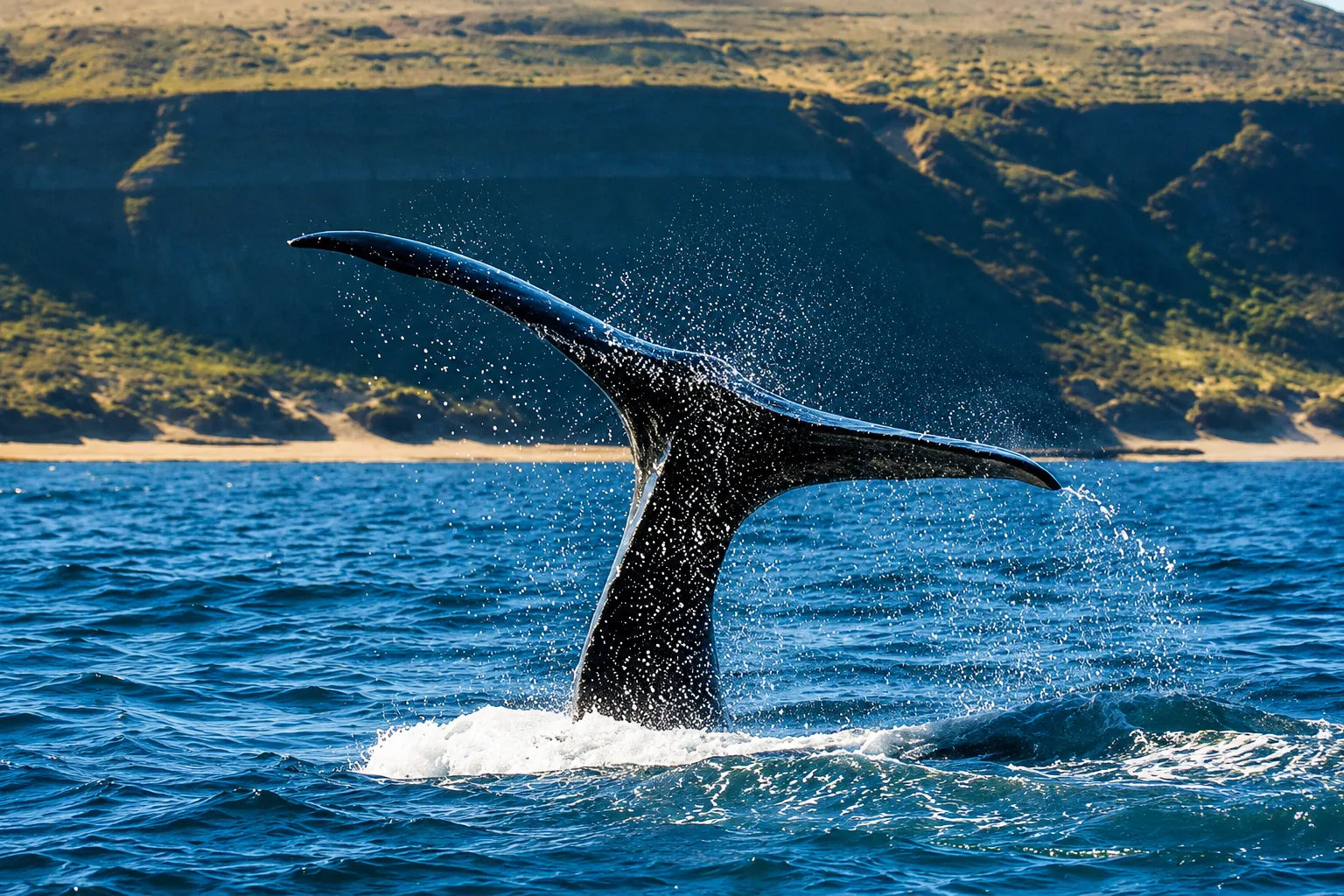
Whales in Imbituba are mainly southern right whales — a species that migrates annually from Antarctica to give birth and breastfeed their young on the Santa Catarina coast. The season runs from July to November, with a peak in September and October. The corridor passes along the coast of Imbituba, Ibiraquera, Praia do Rosa and Praia do Luz. It is possible to observe from land, from natural viewpoints — without a boat and without crowds.
What is the Southern Right Whale
The southern right whale (Eubalaena australis) is one of the largest cetacean species in the southern hemisphere. Adults reach 14 to 17 meters and weigh up to 80 tons. Identifiable by the white calluses on the head (each pattern is unique, like a fingerprint) and the back without a dorsal fin. More than learning technique, it's about creating a relationship with the ocean.
They migrate annually: they spend the summer feeding in Antarctica and, in the southern winter, they go up to warmer waters to reproduce and care for their young. The coast of Imbituba is one of the most important breeding sanctuaries for the species in the South Atlantic.
Where to See — Land Observation Points
Natural viewpoints over Praia do Luz Above the beach, slopes with a direct view of the migratory corridor. Whales often pass within 200 meters of the coast.
Rosa Norte and Rosa Sul Viewpoints, the Viewpoints and trails of Rosa Norte and Rosa Sul offer a privileged view of the bay and the open ocean. During the right whale season, they are a true natural cabin for observing mothers with calves and the movements of these giants of the sea along the coast.
Praia da Vila (Imbituba center), next to the Port of Imbituba. Public viewpoint, access by car. Busiest on weekends.
Praia da Ribanceira, known for its high dunes and calm cove, and is often one of the places with the highest concentration of whales with calves
"The region of Praia do Rosa, Ibiraquera and Praia do Luz has the best observation points on land"
Best Time to Visit
From June to November, right whales visit the southern coast of Santa Catarina to mate, give birth and care for their calves. The months of August and September usually offer the best sighting opportunities from the region's beaches, trails and viewpoints. You can often see a unique natural spectacle less than 100 meters from the coast.
Season Calendar
- July Arrival of the first pregnant females Average
- August Births High
- September Peak — mothers with calves in the bays Very high
- October Peak — reproductive activity Very high
- November Gradual departure to the south High
- December–June Absent (feeding in Antarctica) None
Every year, right whales return to Rosa. Some trips are worth it just for that. 🐋✨